icp vs buyer personaideal customer profile vs buyer personabuying group
ICP vs Buyer Persona: What Each One Does in an ABM Program
An ICP picks which companies make the target account list; a buyer persona picks which people to reach. See the decision each drives in an ABM workflow.
Ishan ManchandaNov 11, 2026
Last updated: Nov 11, 2026
ICP vs Buyer Persona: What Each One Does in an ABM Program
Request a quote and our experts will contact you within 24 hours with tailored solutions and pricing.
By the ABM for B2B SaaS Editorial Team. Last updated October 28, 2026.
An ideal customer profile (ICP) defines which companies belong on a target account list, while a buyer persona describes the people inside those companies who research, influence and approve a purchase in account-based marketing (ABM). ICP vs buyer persona is a question of units: the ICP picks companies, the persona picks people. Mix them up and a campaign can reach the right firms and still land with the wrong job titles. A June 2026 GrowthSpree audit of 56 LinkedIn accounts found individual contributors and entry-level staff took 36% of budget, while a Factors.ai analysis found 76% of title-targeted spend went to Director, VP and C-suite titles (Factors.ai, 2026). This article separates the two artifacts, shows the decision each one drives, and gives a rule for which to build first. If the ICP is still undefined, start with the firmographic data guide.
Key Takeaways
An ideal customer profile (ICP) decides which companies go on the target account list; a buyer persona decides which roles inside those companies get reached.
Build the ICP first, because a persona aimed at the wrong companies only produces leads that never buy.
A B2B buying group is larger than any one persona: Forrester's 2026 survey puts it at 13 internal stakeholders plus nine external influencers.
On LinkedIn, the ICP becomes the matched company list and the persona becomes job function and seniority filters plus exclusions.
Formal documents are optional at low deal sizes; a one-page ICP and a short role list can be enough.
What is the difference between an ideal customer profile and a buyer persona?
Ideal customer profile (ICP) is a description of the companies most likely to buy and succeed, built from firmographic and technographic traits. Buyer persona is a description of the roles inside those companies who research, influence or approve a purchase. The ICP answers which accounts to pursue; the persona answers which people to reach. Forrester's 2026 survey counts 13 internal stakeholders in a typical decision (Forrester, 2026), so an ABM program needs both, in that order.
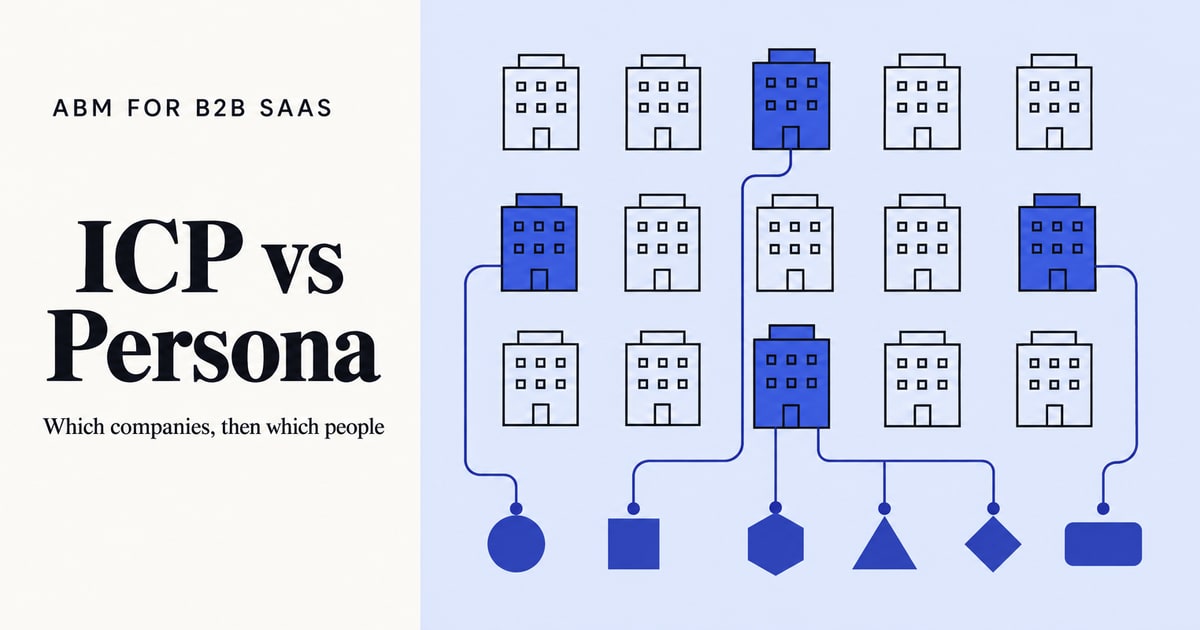
Flat vector illustration of a grid of office-building blocks with a few highlighted in indigo
The table below sets the two side by side, with the buying group added because it is the term most often confused with a persona.
Attribute
Ideal customer profile (ICP)
Buyer persona
Buying group
Unit described
A company
A role or person
All people involved in one deal
Built from
Closed-won accounts, firmographic and technographic data
Interviews, CRM contact roles on won deals
Deal records and sales input
Typical attributes
Industry, employee range, region, tech stack
Responsibilities, goals, objections, information sources
Roles, influence, order of involvement
Decision it drives
Who goes on the target account list and in which tier
Which messages and targeting filters reach each role
Which roles a campaign must cover per account
First place it shows up
List building and exclusions
Content and ad targeting
Sales coordination and account plans
The practical rule: company traits go in the ICP, role traits go in the persona, and the group is the set of personas that one deal actually needs.
What does an ICP decide in an ABM workflow?
An ideal customer profile (ICP) decides which companies earn a place on the target account list and which account tier each one receives, before any ad or sequence exists. Each added company brings a buying group: Forrester's 2026 survey found 13 internal stakeholders and nine external influencers in a typical decision (Forrester, 2026). A June 2026 GrowthSpree article reports lists of 500 to 2,000+ named accounts where 100 to 300 would work (practitioner view, no sample stated).
Flat vector illustration of a funnel filtering many small squares into a short ordered list of tiers
Target account list is the named set of companies that meet the ICP today and receive ABM effort. It is an output of the ICP, not the ICP itself. Building it from the ideal customer profile takes four steps:
Pull closed-won accounts and note shared traits: industry, employee range, region and tech stack.
Compare them with closed-lost and churned accounts to find disqualifiers.
Set a company-size floor and exclusions. In the GrowthSpree audit of 56 LinkedIn accounts (June 2026), 20% of spend reached firms under 50 employees.
Rank the accounts and assign tiers. Published ranges from the same GrowthSpree article suggest 10 to 50 accounts for 1:1, 50 to 200 in 5 to 15 clusters for 1:few, and 200 to 500 for 1:many.
Job titles do not belong in this artifact. The ICP stops at the company boundary, and the guide to defining target accounts with firmographics covers the fields worth using.
Who is in the buying group a buyer persona has to cover?
Buying group is the set of people inside one company who research, shape and approve a purchase, and one buyer persona cannot describe it. Forrester's 2026 survey of nearly 18,000 buyers puts the typical decision at 13 internal stakeholders and nine external influencers (Forrester, 2026). Procurement acts as a decision-maker in 53% of buying cycles (Forrester, 2026).
Forrester's release says "The typical buying decision now includes 13 internal stakeholders and nine external influencers, with that number rising for more complex or strategic purchases." (Forrester, 2026) The same research notes that buyers gather and validate information with the aim of "making decisions that they can defend" (Forrester, 2026). A persona written only for the champion misses most of that group.
Which roles do personas usually miss?
Persona work tends to stop at the champion and the economic buyer. Roles that often appear late in a B2B SaaS deal include:
Procurement, which engages from the start in many cycles
Finance, which tests the business case
Security and IT, which evaluate risk and integration
Technical evaluators and end users, who shape the shortlist
Group size also moves with the product. Forrester found buying groups of 14 members versus seven when a purchase includes genAI features (Forrester, 2026). That matters for B2B SaaS, cybersecurity and data and analytics vendors.
Why does group-level relevance matter?
Gartner reported in May 2025 that individual-level content relevance can hurt buyer consensus, while group-level relevance helps (Gartner, 2025). Write personas as a set of linked roles for one account, not as isolated individuals each receiving a different story.
How do you turn an ICP and personas into LinkedIn targeting?
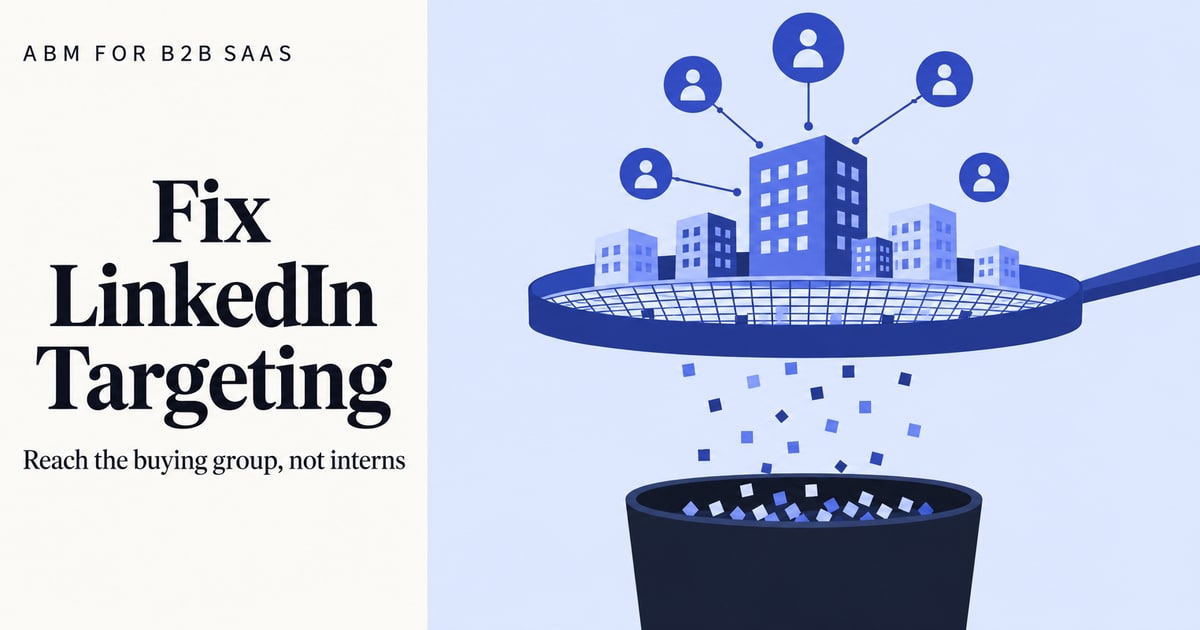
On LinkedIn, an ideal customer profile (ICP) becomes a matched company list, and a buyer persona becomes job function and seniority filters layered on top, with exclusions set on day one. Without that second layer, budget drifts to the wrong roles: a June 2026 GrowthSpree audit of 56 LinkedIn accounts found individual contributors and entry-level staff took 36% of spend.
Flat vector illustration of layered filter bars narrowing a wide band into a focused indigo stripe
Our results: A June 2026 audit published by GrowthSpree covered 56 LinkedIn accounts and $9.4M in ad spend. Decision-makers received 33% of budget against a target of 60% or more. Non-buying job functions caused 30% of wasted spend, and 20% of spend reached firms under 50 employees.
The mapping from artifact to ad setting looks like this:
Targeting layer
Comes from
Example setting
What breaks without it
Matched company list
ICP and target account list
Upload the named accounts for the tier
Spend reaches firms outside the ICP
Company-size floor
ICP
Exclude firms below the size floor
Small firms take budget (20% reached firms under 50 employees)
Job function
Buyer persona
Include the functions that decide or evaluate
Non-buying functions cause 30% of waste
Seniority
Buyer persona
Include the levels that sit in the buying group
Entry-level staff consume 36% of budget
Exclusions
Both
Remove students, interns and unrelated functions
Clicks at $8 to $25 each go to people who cannot buy
All figures in the last four rows come from the GrowthSpree audit (June 2026).
Does the waste really land on interns and analysts?
The evidence is mixed, so treat both audits as directional. The GrowthSpree audit shows a skew toward junior roles. Factors.ai, a vendor analysis described as drawing on $150M of LinkedIn spend, reports the opposite: 76% of title-targeting spend went to Director, VP and C-suite titles, which make up 13.9% of LinkedIn profiles (Factors.ai, 2026). It also reports a 22-point lift in pipeline win rate for deals that reach end users, influencers and technical evaluators. Neither source states how its sample was built. The shared lesson: budget should follow the buying group, not one seniority band. The guide to pipeline-based analytics shows how to check the result on pipeline instead of clicks.
Do you need both an ICP and buyer personas for ABM?
Yes, but in sequence: an ideal customer profile (ICP) first, then buyer personas for the roles that matter at each account tier. An ICP without personas reaches the right companies with the wrong people, and personas without an ICP produce leads from firms that will never buy. Published ranges show buying groups growing from 5 to 8 stakeholders at $25K to $100K deals to 10 to 15 at $250K to $1M.
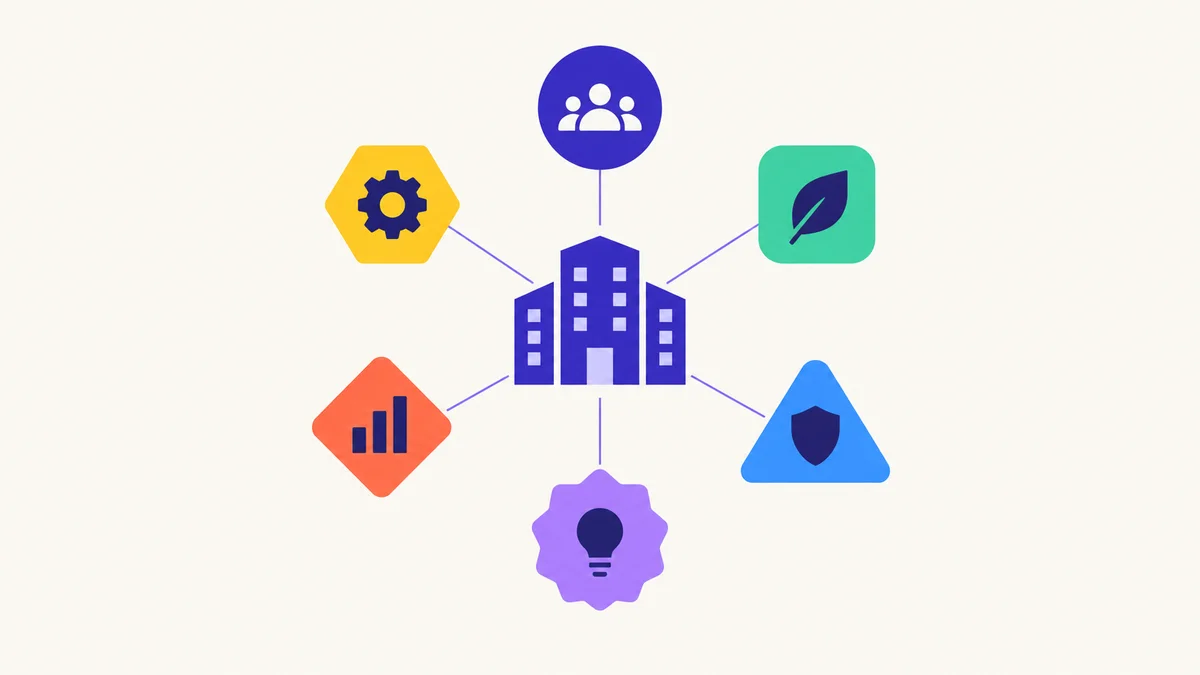
Flat vector illustration of a network of linked role badges around a central building shape
Deal size sets how much persona depth is worth building. The ranges below come from GrowthSpree's 2026 buying committee benchmarks and carry no stated sample:
Deal size
Stakeholders
Sales cycle
What to build
$25K to $100K
5 to 8
49 to 84 days
ICP plus a short role list for the champion and economic buyer
$100K to $250K
7 to 10
84 to 126 days
ICP plus role profiles that add technical evaluators and finance
$250K to $1M
10 to 15
126 to 180 days
ICP plus a role map per account, including procurement and security
Personas also feed content. Demand Gen Report's 2026 ABM Benchmark Survey found nearly 80% of surveyed organizations run ABM, and 47% named personalized content the highest-ROI tactic (Demand Gen Report, 2026). Both artifacts stay distinct from lead-volume programs, as the demand generation guide explains.
Who should skip formal ICP and persona work?
Formal ICP and buyer persona documents are not worth building when annual contract value (ACV) is low, only one person works named accounts, or too few closed-won deals exist to show a pattern. ABM typically pays when ACV exceeds $15K and at least one seller works named accounts. Digital Commerce 360 reported in 2026 that Gartner's survey found 67% of buyers prefer a rep-free experience, up from 61% (Digital Commerce 360, 2026).
That survey covered 646 buyers (August to September 2025). Relevance before sales contact matters even for small teams, so a one-page ICP and a short role list still beat none.
Other honest limits:
Forrester's figures are global averages across purchase types, so a narrow B2B SaaS product may see a smaller group.
GrowthSpree's buying committee ranges and its ABM article are published ranges or practitioner views with no stated sample.
The GrowthSpree audit and the Factors.ai analysis disagree on where waste falls, so neither should set a budget alone.
Personas built from a handful of interviews describe opinions, not buying behavior. Check them against contact roles on closed-won deals.
Frequently Asked Questions
Is an ICP the same as a target account list?
No. An ideal customer profile (ICP) is the set of criteria that describes a good-fit company, while a target account list is the named companies that meet those criteria today. One ICP can produce several lists, one per region or account tier. The list changes as accounts convert, churn or fall out of fit; the criteria change more slowly.
How many buyer personas should I build for one ABM account?
Build one role profile for each role the deal depends on, not one persona per account. Published ranges from GrowthSpree's 2026 buying committee benchmarks put buying groups at 5 to 8 stakeholders for $25K to $100K deals and 10 to 15 for $250K to $1M deals (no sample stated). Larger deals add procurement, security and finance roles.
Should firmographic details like company size and tech stack go in a persona?
No. Firmographic and technographic details, such as company size, industry and tech stack, belong in the ideal customer profile (ICP) because they describe the company. A buyer persona should hold role-level details: responsibilities, goals, objections, information sources and the part the role plays in the decision.
How many people are in a B2B buying group?
A typical B2B buying decision involves 13 internal stakeholders and nine external influencers, according to Forrester's 2026 survey of nearly 18,000 buyers. Published ranges from GrowthSpree's 2026 benchmarks are lower for smaller B2B SaaS deals: 5 to 8 stakeholders at $25K to $100K. Figures differ because deal size and the definition of a stakeholder differ.
How often should I update my ICP and personas?
Review the ideal customer profile (ICP) and buyer personas after each full sales cycle, because that is when closed-won and closed-lost data first exist to test them. Published ranges from GrowthSpree's 2026 benchmarks put B2B SaaS sales cycles at 49 to 180 days depending on deal size (no sample stated), so most teams revisit them once or twice a year.
Verdict: Build the ICP First, Then the Personas
Choose the ICP when the question is which companies to pursue. Choose buyer personas when the question is which roles to reach inside those companies. Build the ICP first, then add personas for the roles each account tier needs.
The ICP sets the target account list and the account tier.
The persona sets job function, seniority and message for each role.
The buying group is the full set of roles one deal needs, so cover more than the champion.
Exclusions belong in the setup on day one.
Review both after each full sales cycle, and judge results on pipeline per account.
Next step: check the current target account list against the ICP, then map the roles that deal size demands. The firmographic data guide covers the first half.
Meet with an expert: A free consultation. Bring your target account list and brainstorm the next step with an ABM expert.
Written by
Ishan Manchanda
Ishan Manchanda is co-founder of GrowthSpree, a B2B SaaS marketing consultancy founded in 2017 that has managed $60M+ in ad spend across 300+ B2B SaaS companies. He focuses on demand generation, go-to-market strategy and pipeline growth, and has been featured in Silicon Valley Times, SaaS Mag and the Unbounce podcast.
 Ishan ManchandaNov 11, 2026